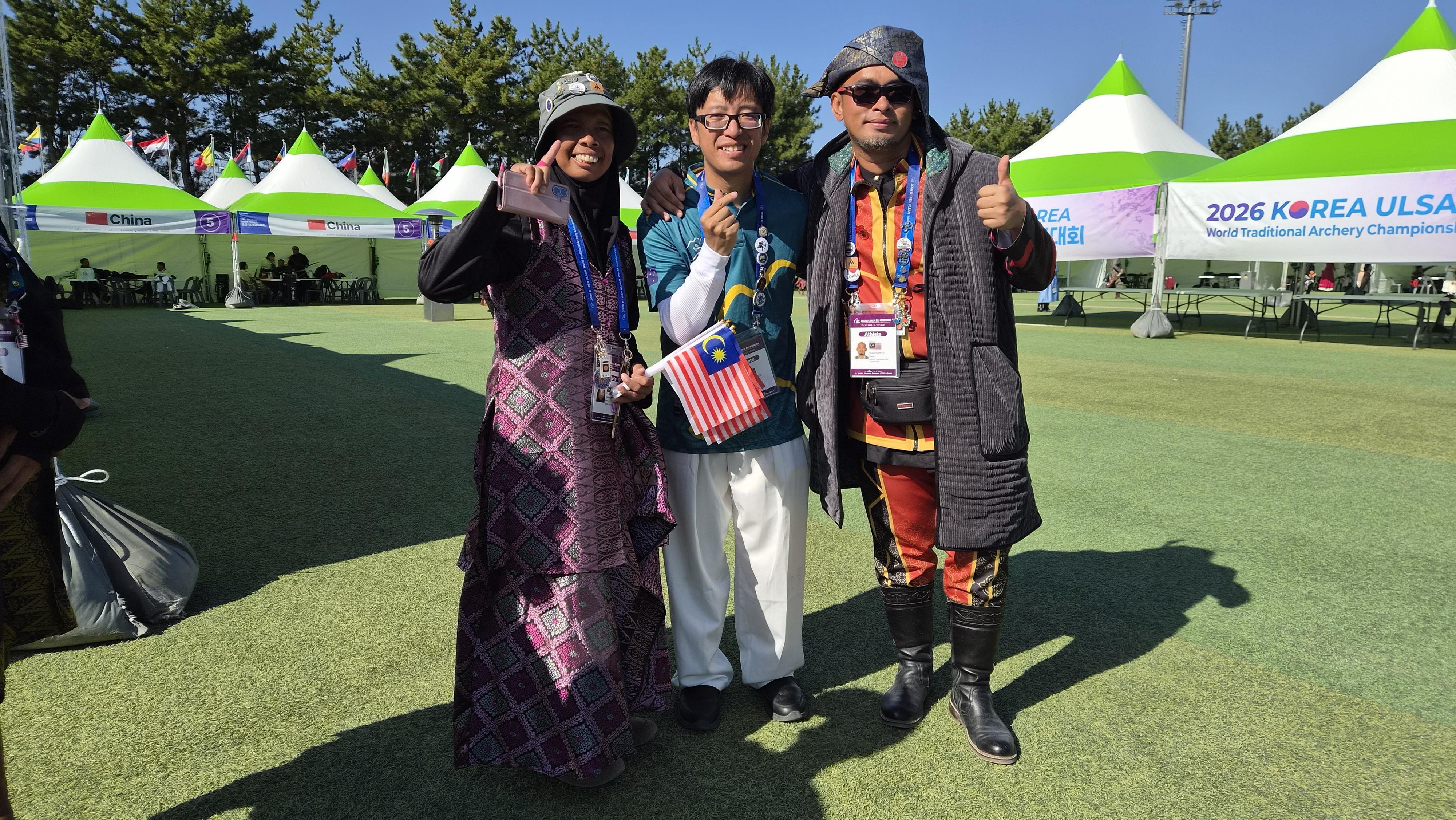
I was given the honour of representing Australia at the World Traditional Archery Championship in Ulsan, South Korea.
The process began in 2025 with qualification for the World Nomad Games. Though I did not make the team, my performance earned me selection for Ulsan. I joined a team of 12 Australians and travelled to Korea for the event from 29 October to 4 November. We arrived in Seoul a few days early to acclimatise, then took the bullet train to Ulsan.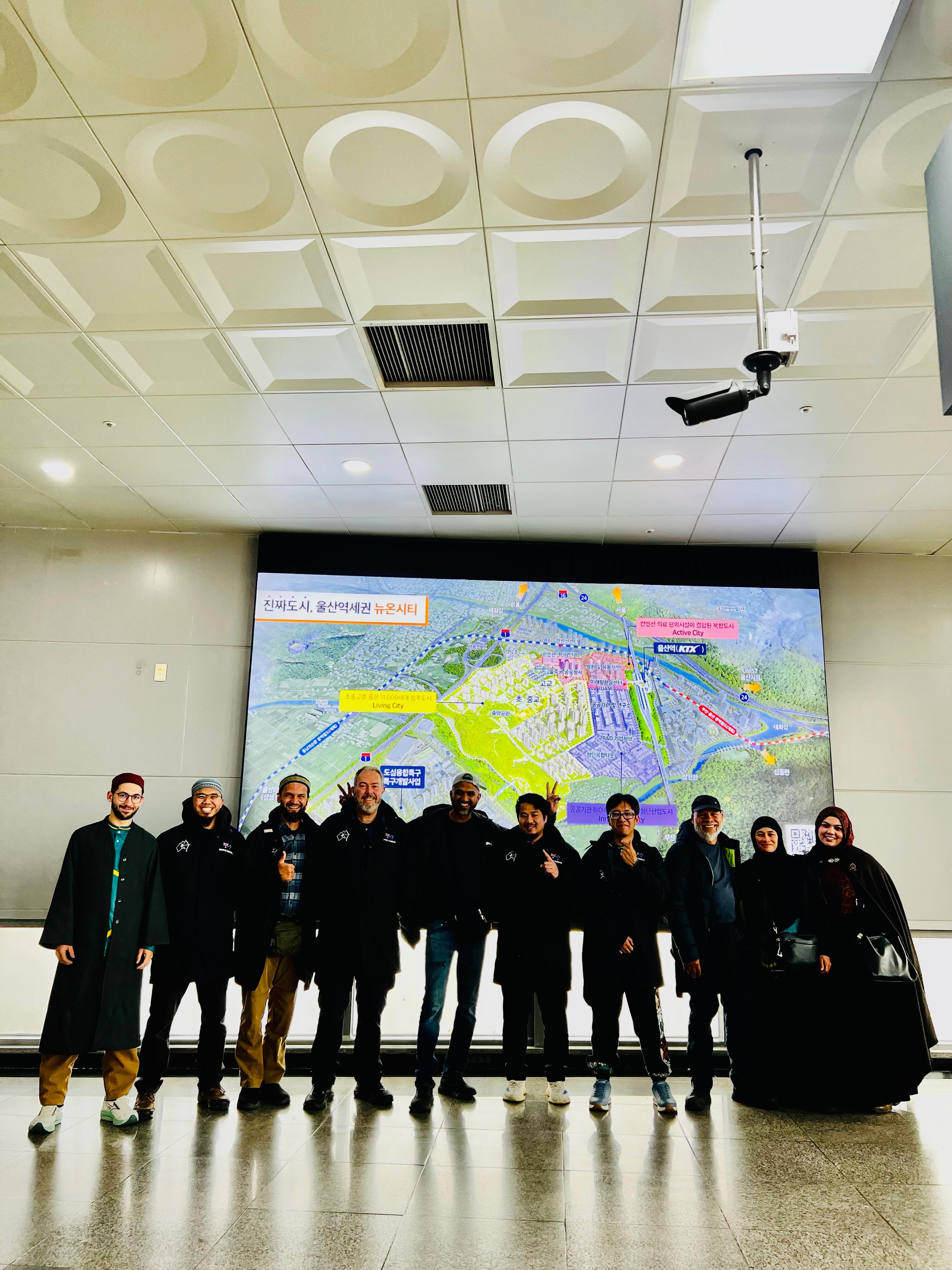
As this was my first international archery tournament – and a World Championship no less – there were numerous challenges. As a primarily modern-style archer and coach, I was competing in a less familiar discipline against specialists from around the world, in a series of events I had never attempted before, including some of the most challenging long-distance rounds.
We arrived at the competition venue for official practice and a welcome luncheon. Teams from around the world were present in their finest traditional clothing. We then took part in the opening ceremony, where the proudly multicultural Australian team was the first to enter the stadium.
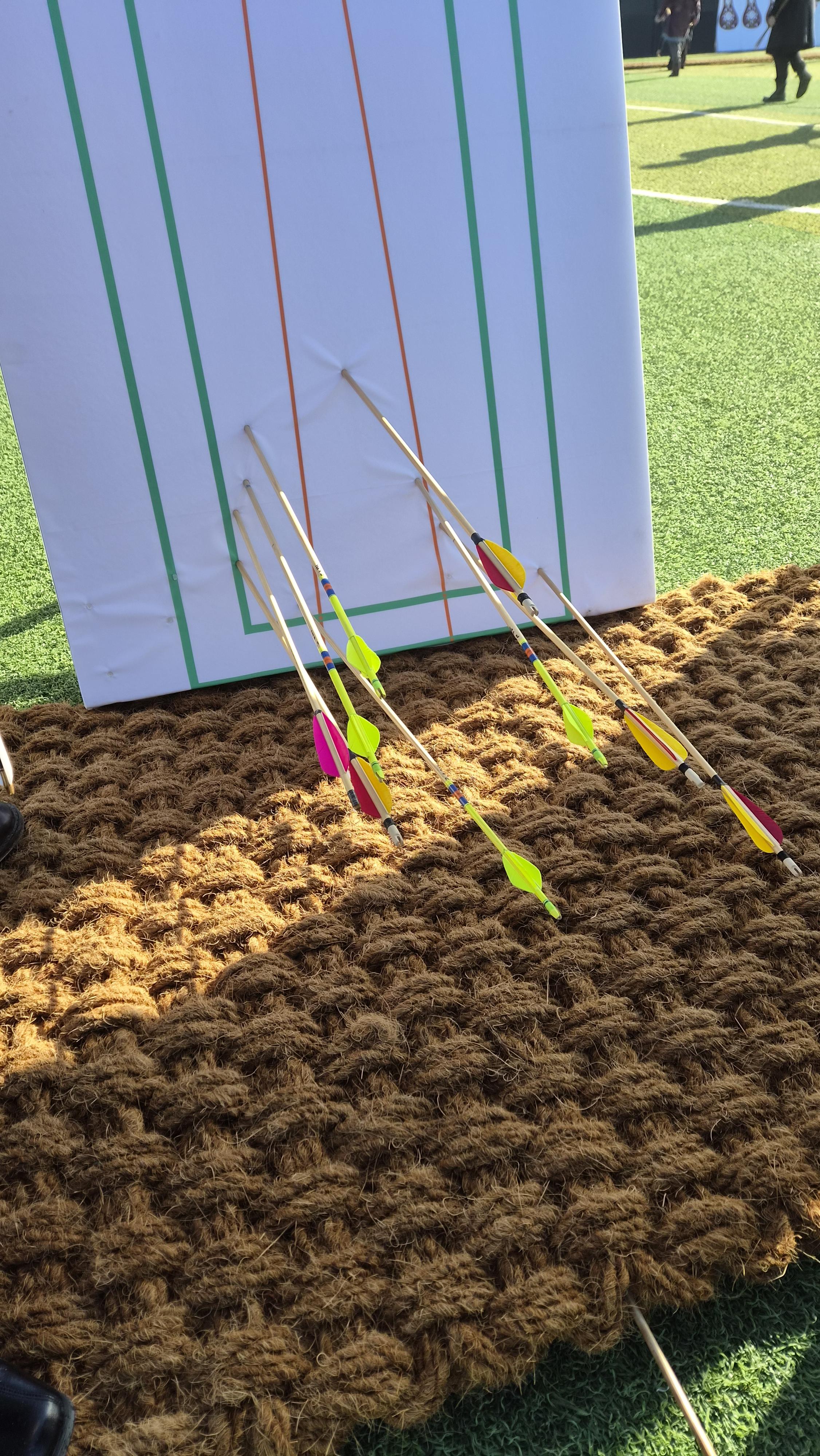
The first day of preliminary rounds started with the 145m Korean gungdo round. We shot at a target 2m wide and 2.6m tall. While the Koreans were specialists in this event, the rest of the field struggled to get even a single hit on target. I was ecstatic when I scored my first hit, then my second. I narrowly missed a potential perfect 5-hit round at the end, but I felt my confidence growing as we moved on to the other events.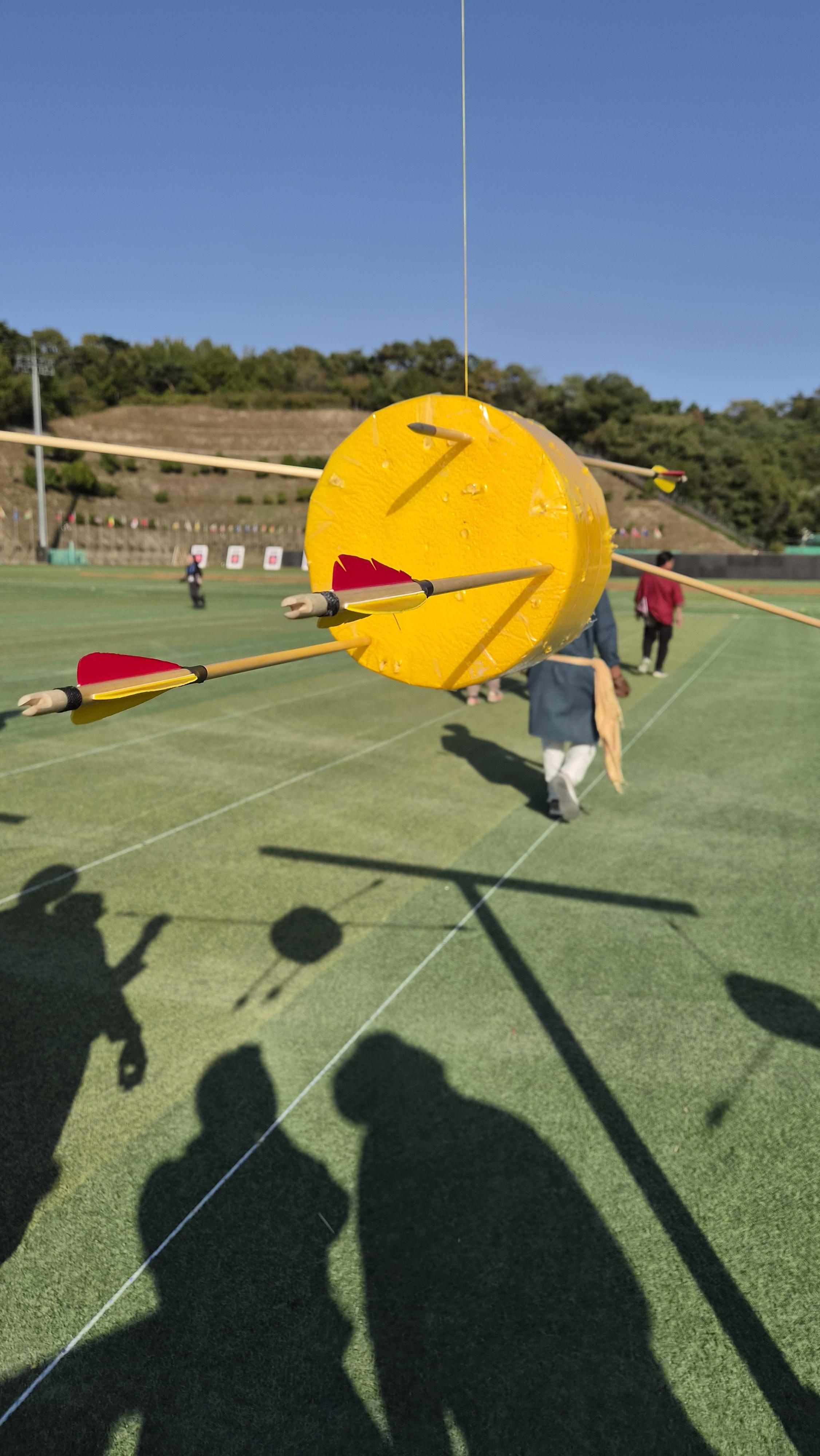
That same afternoon, we competed in the 30m zhamby event. Originating from Kazakhstan, the event involves shooting at a small suspended target that sways and spins. I started and finished strong, scoring 4 out of 5 hits in the final round, with spectators cheering for every consecutive hit. This was a world-class finish that put me just outside the top 100.
The next day, we completed the 70m Turkish puta preliminary round. This was highly competitive, as many participants specialised in this event. The following day, we completed the Hungarian 90m tarsca event. Despite this being my first attempt at the event, I performed above expectations.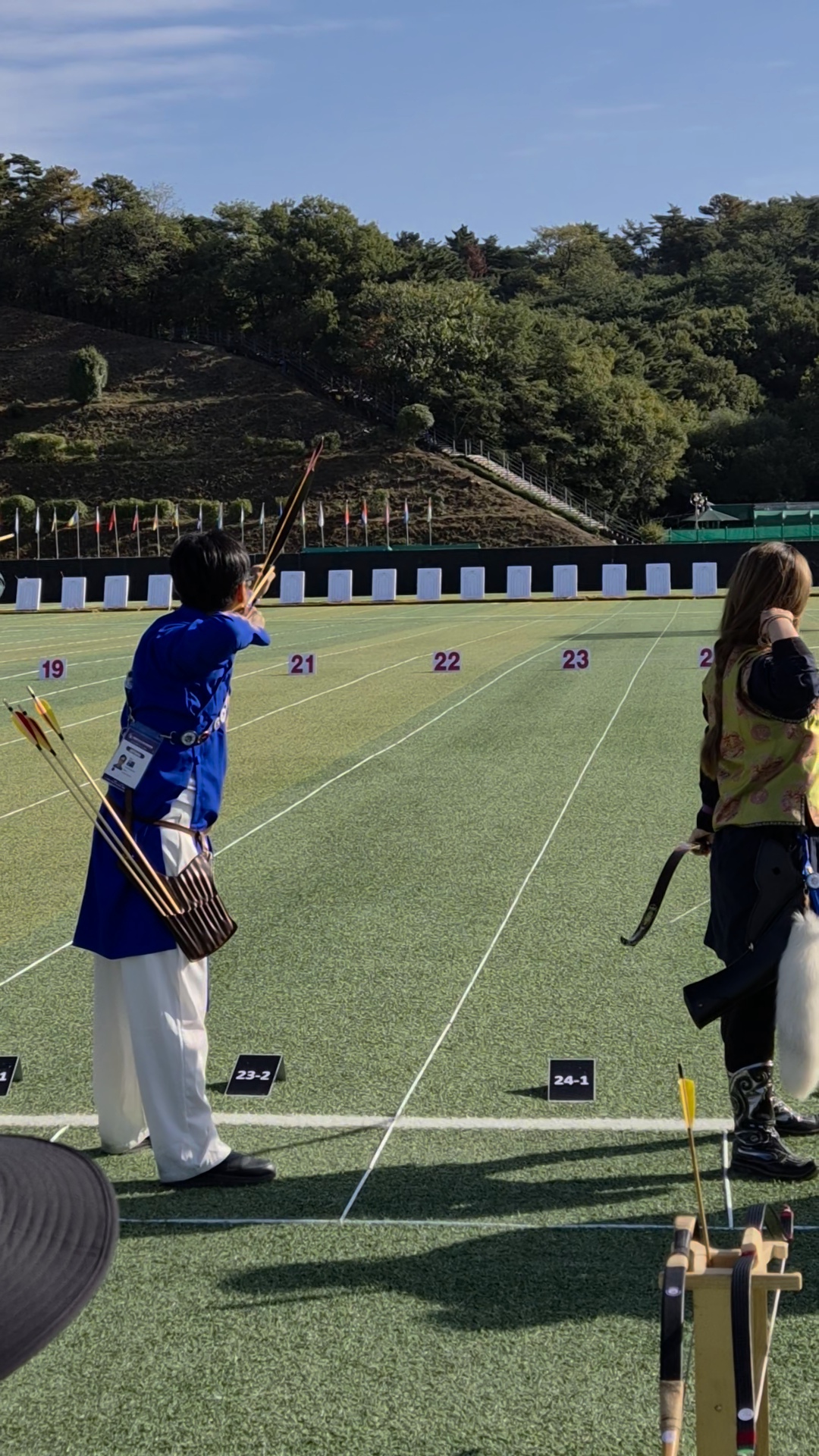
We didn’t qualify for the elimination and medal matches. In a competition dominated by elite archers from Mongolia, Kazakhstan, Kyrgyzstan, Turkey and Malaysia, we stood proudly on the field and made the most of this unique learning experience. I finished with an overall ranking of 199th out of 524, and helped bring the Australian team to 20th out of 83.
The event was truly a once-in-a-lifetime experience. It has been difficult to describe the feeling of representing Australia on the world stage. My positive memories are not only of the intensity of the competition, but also of the wonderful people we connected with from around the world.